Tardive Dyskinesia
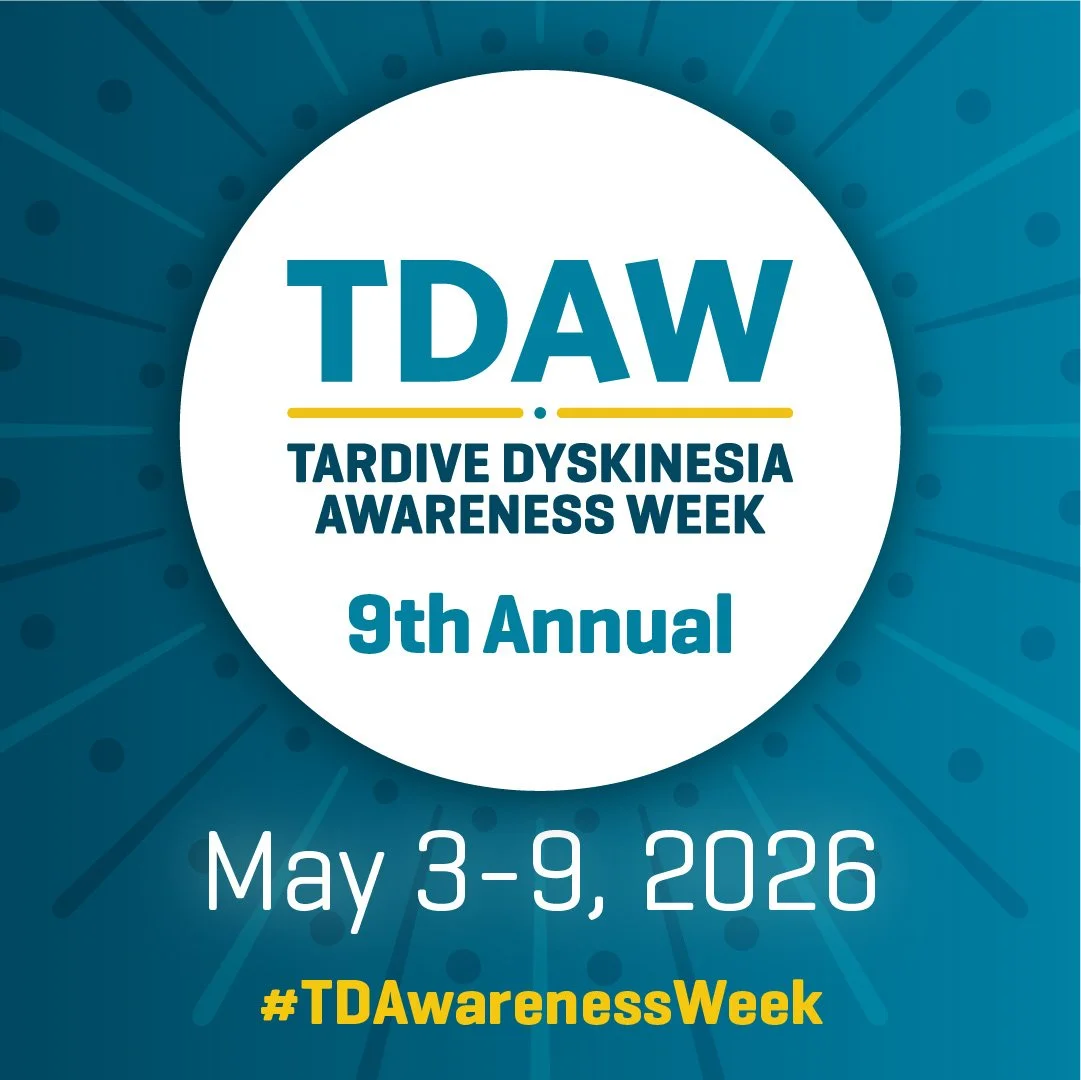
May 3-9, 2026, is Tardive Dyskinesia Awareness Week
What is Tardive Dyskinesia (TD) Awareness Week?
TD Awareness Week raises awareness of TD and aims to reduce stigma and support those affected by the condition. This important week unites the mental health community to recognize the physical, social, and emotional effects of TD and the importance of routine screenings by a healthcare provider for earlier identification and treatment. At least 800,000 adults in the United States are estimated to be living with TD; approximately 60% remain undiagnosed.
What is TD?
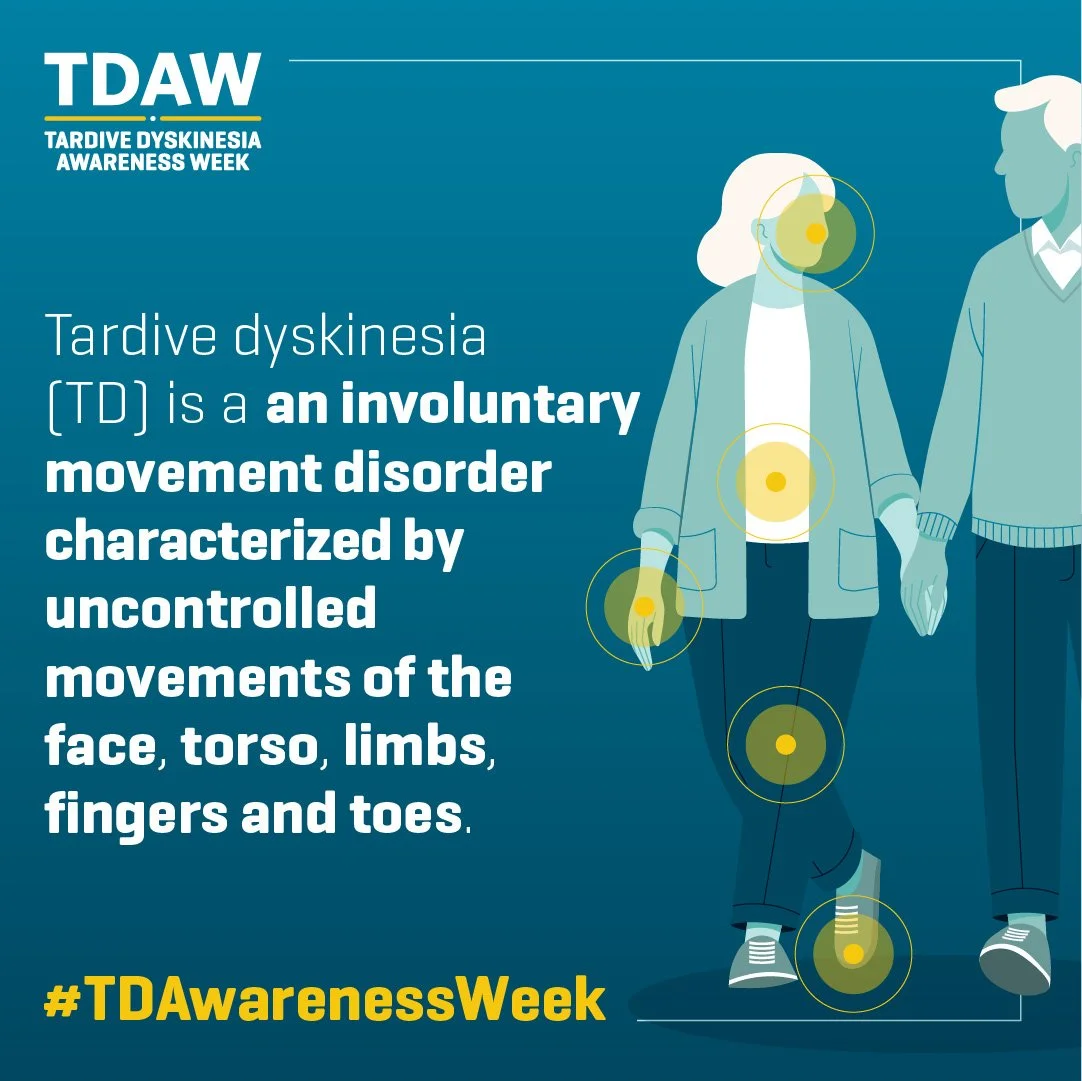
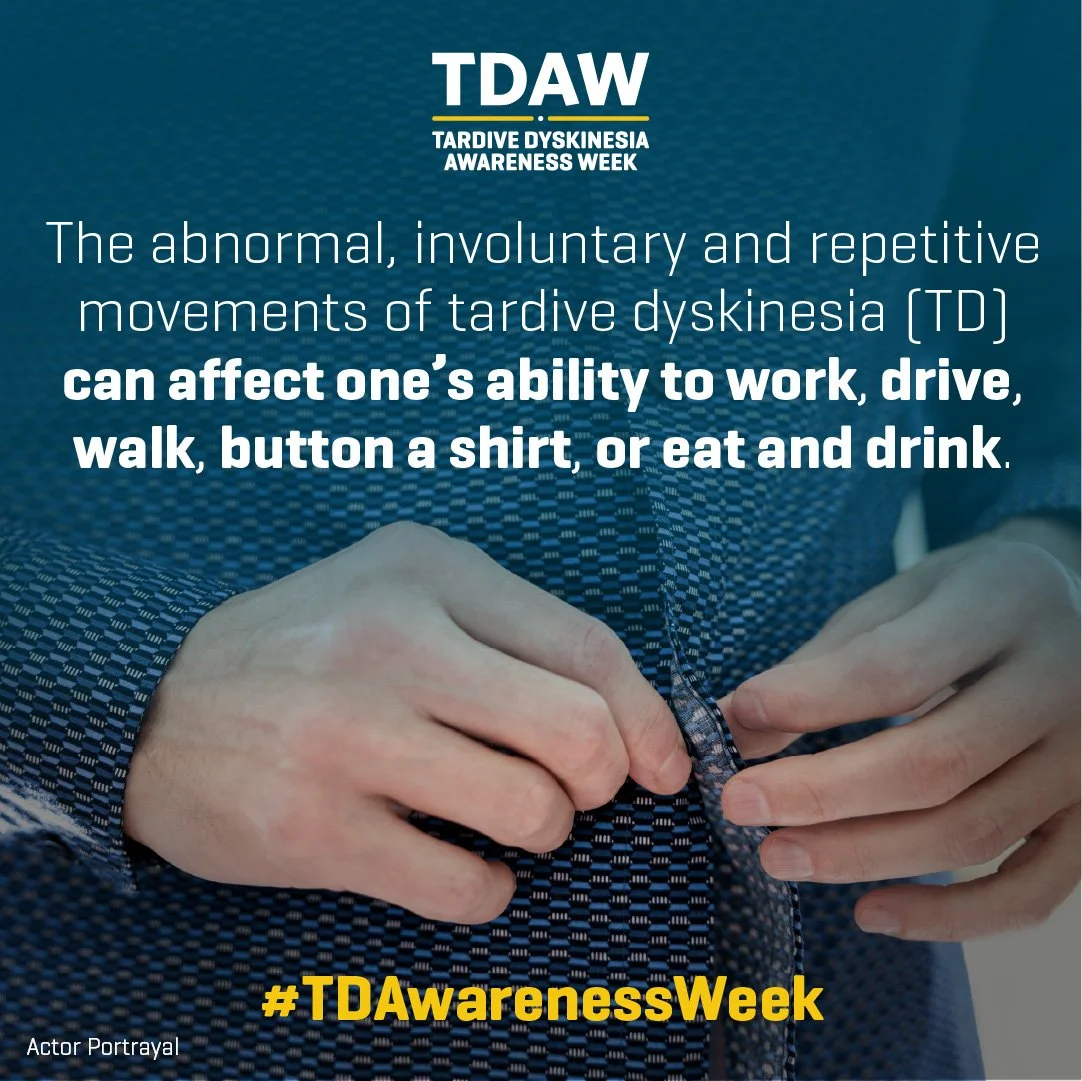
TD is an involuntary movement disorder that is characterized by uncontrolled movements of the face, torso, limbs, fingers, and toes. It is associated with the use of antipsychotic medication that may be necessary to treat people living with mental health conditions such as bipolar disorder, major depressive disorder, schizophrenia, and schizoaffective disorder. TD is a chronic condition that is unlikely to improve without treatment.
Download the Understanding TD Fact Sheet.
Talk to Your Healthcare Provider about TD
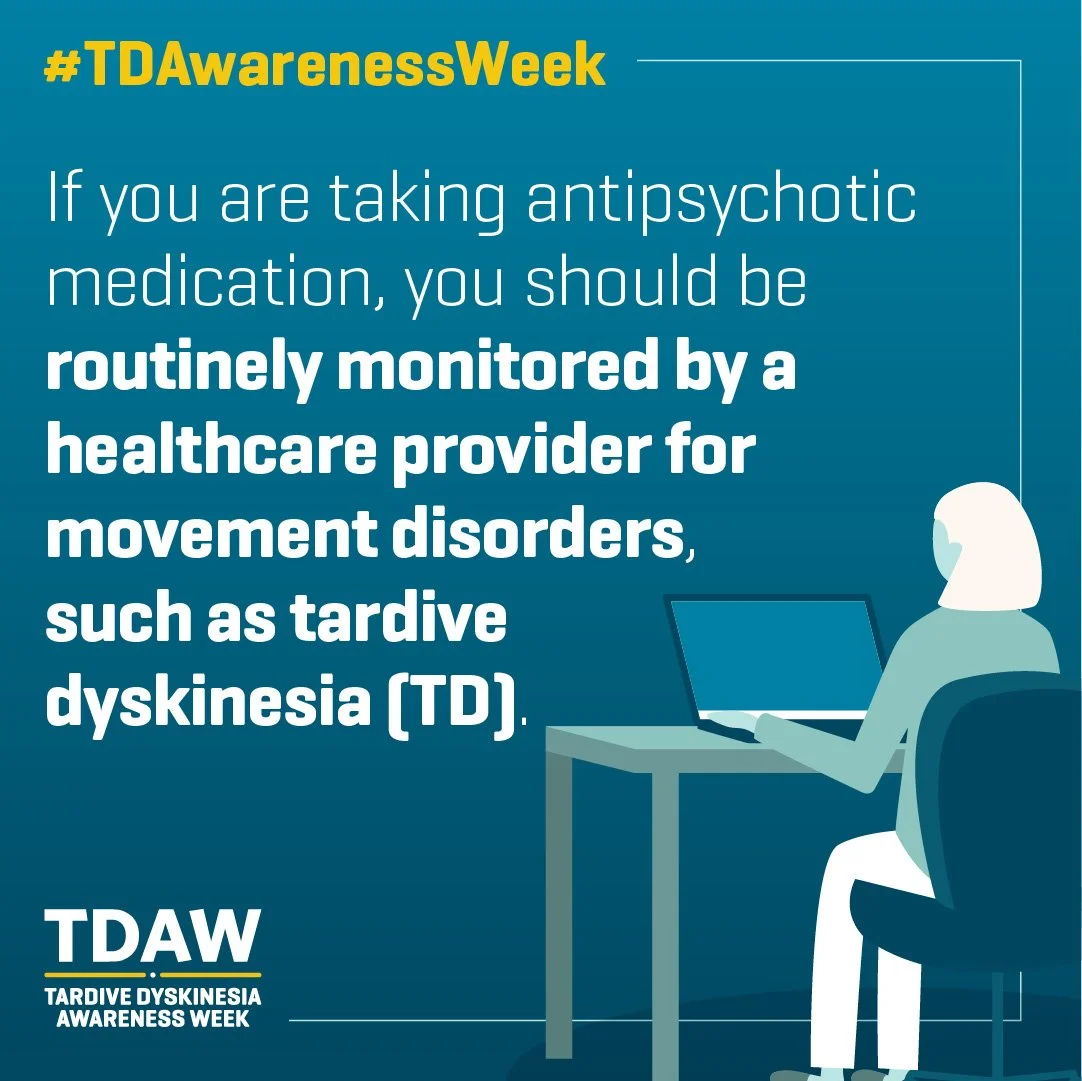
If you or someone you know is taking antipsychotic medications, talk to your healthcare provider and ask to be screened for TD, especially if you notice any unusual or involuntary movements. Identifying and addressing (TD) early can profoundly improve the quality of life for people living with mental health challenges, as well as for their families and caregivers. When you speak with your provider, sharing a complete medication history, including any mental health treatments, will be incredibly helpful. According to the American Psychiatric Association’s 2020 guidelines for managing schizophrenia, regular screenings for TD are recommended—every six months for high-risk individuals and annually for others. Taking these proactive steps can lead to better outcomes and overall well-being.
Personal Perspectives
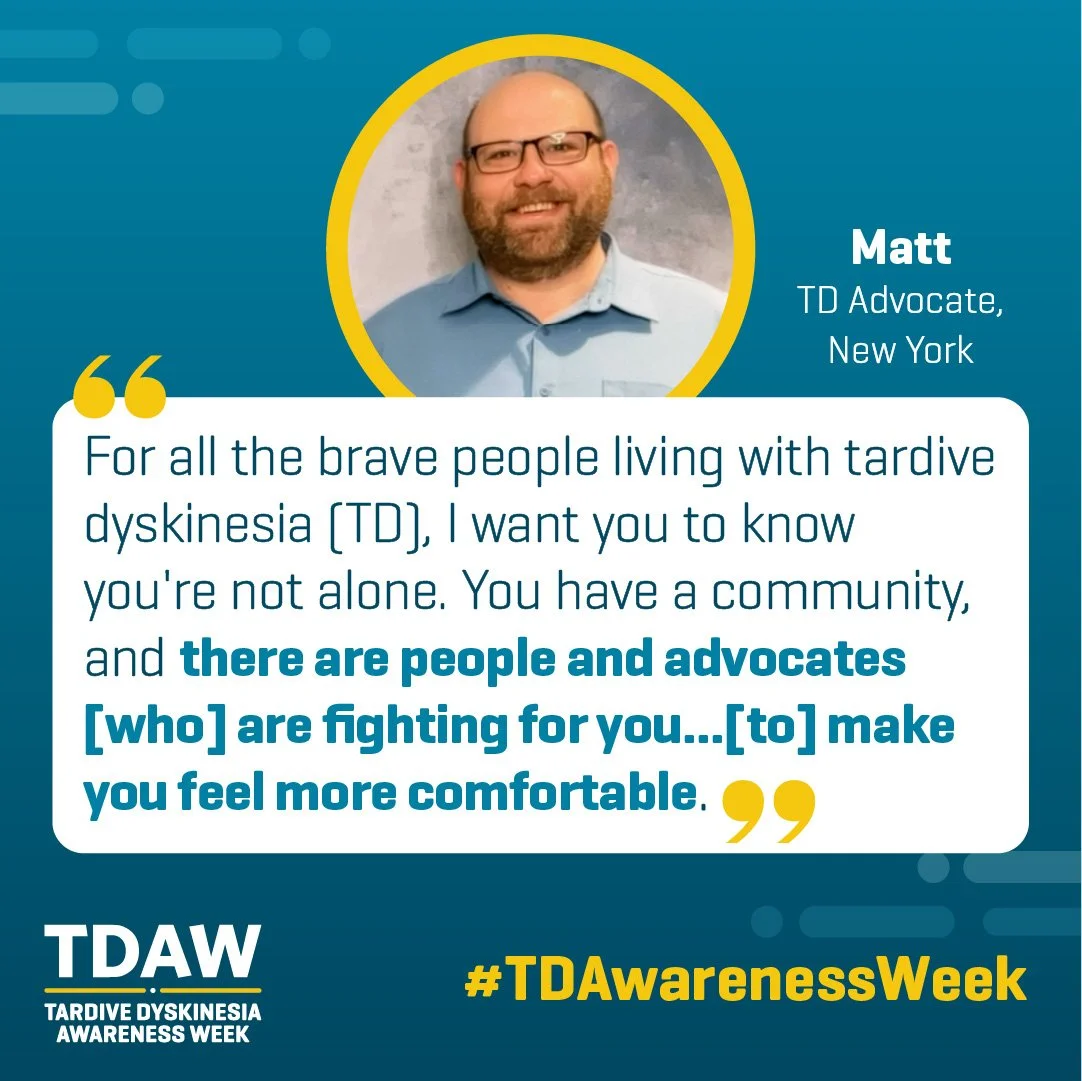
Living with TD and caring for someone with the condition can feel isolating. Listen to David’s story as a care partner to someone living with TD.
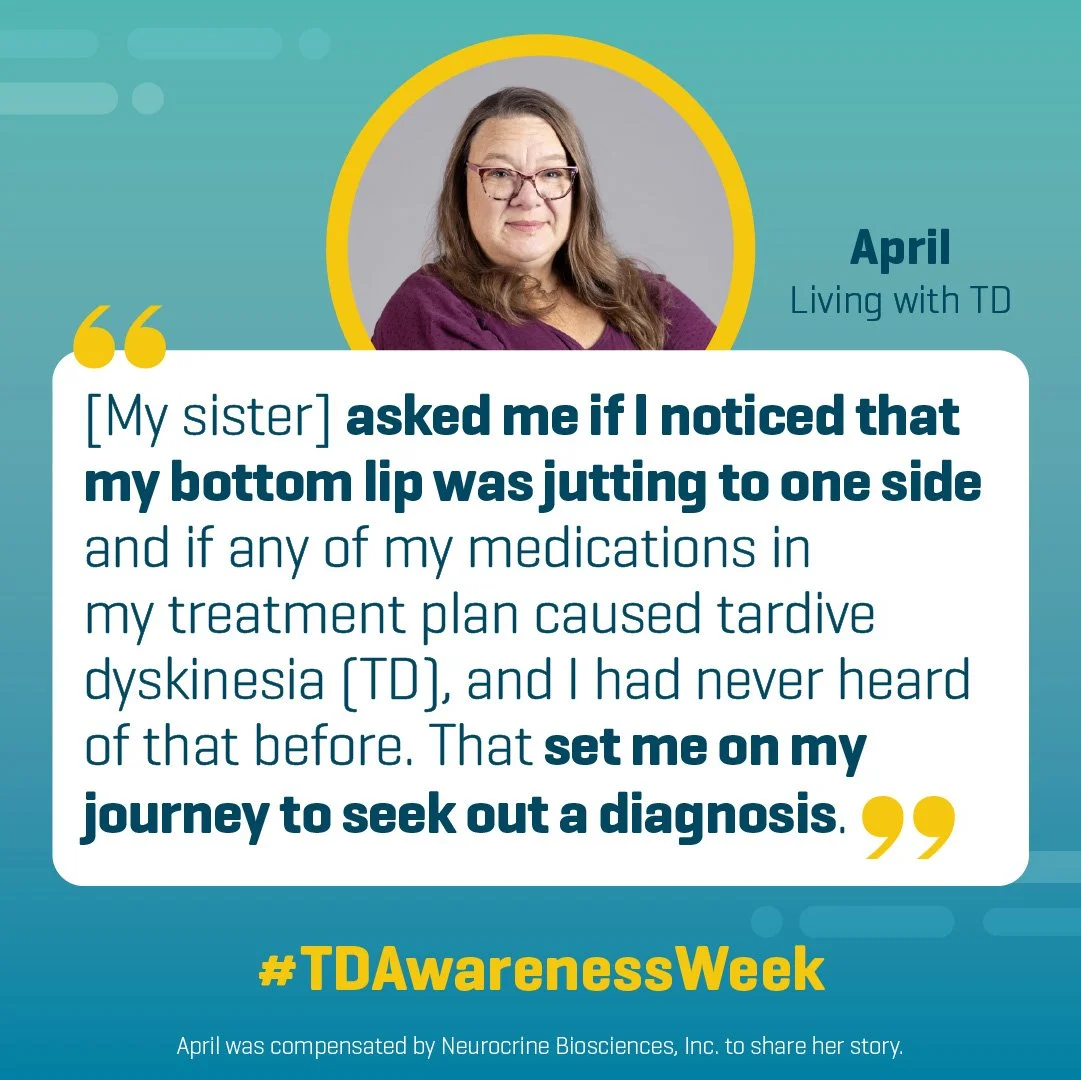
TD can impact daily life, even for those with mild TD movements. Listen to April’s journey with TD.
Many people living with TD feel judged or misunderstood. Listen to Jeff’s story living with Schizophrenia and TD.
Jeff and April talk about the importance of raising awareness about TD. To learn more about TD, visit TalkAboutTD.com.
Resources
Use the TD Patient Brochure to learn how and why TD affects some people, and to start a conversation with a healthcare provider.
Download the TD Awareness Week Infographic to share and raise awareness of TD
Download the Mental Health and TD Diverse Communities Factsheet to raise awareness about disparities in care among adults diagnosed with serious mental illness and the risk of drug-induced movement disorders, including TD.
Explore helpful resources at TalkAboutTD.com